When Levi Waldron, department chair of epidemiology and biostatistics at the School of Public Health, accepted his full-time faculty position in 2016, he had to go through all the standard paperwork with the school’s HR department – things like tax information and healthcare enrollment.
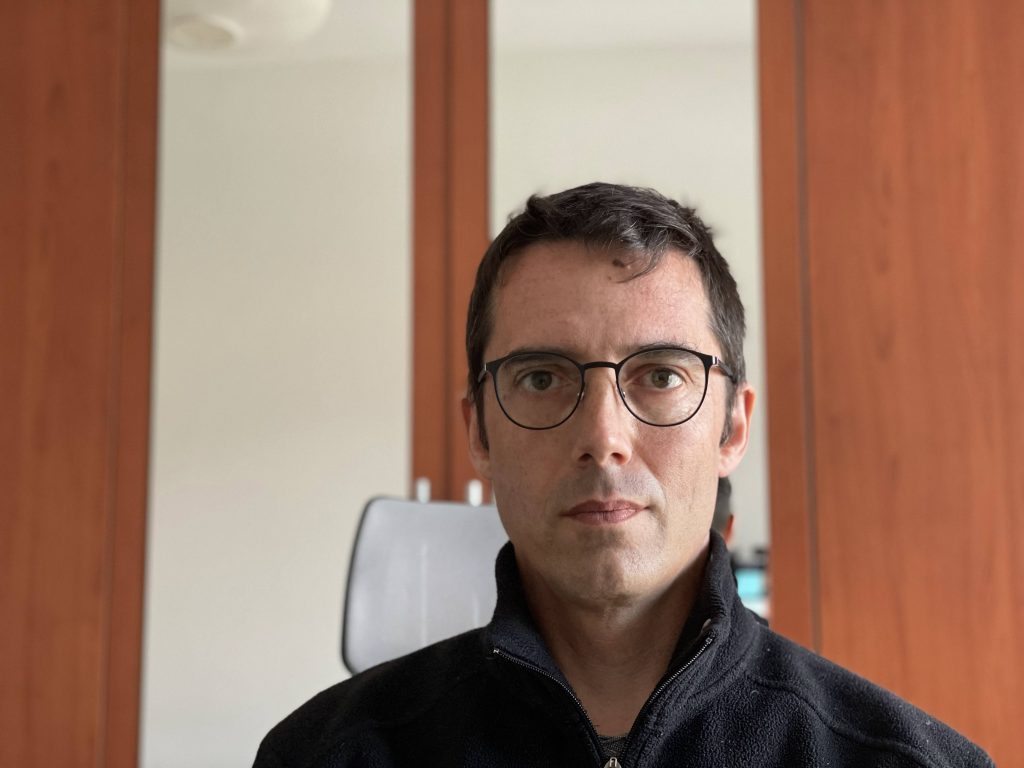
Levi Waldron (Photo courtesy of Levi Waldron).
HR also asked him if he wanted to start a pension plan with the Teacher’s Retirement System (TRS), one of CUNY’s retirement account providers. Waldron told HR he already had a TRS pension plan – for the past three years, he had been working in the CUNY system at Hunter College.
But the HR department told him there was no account on record. Waldron couldn’t believe it.
“It was shocking,” Waldron said. “It was something that I had never imagined was even a possibility.”
Waldron remembers going to onboarding sessions at Hunter, and learning about the retirement options. CUNY offers a choice of two retirement systems for full-time employees: TRS and the Teacher’s Insurance and Annuity Association (TIAA). If no election is made after 30 days, CUNY is required by state law to enroll the employee in TRS.
Waldron said he doesn’t remember filling out any forms because he thought he would be automatically enrolled in TRS – he had no reason to assume otherwise.
“I never imagined that a university would not notice that,” he said. “To me, it would be like suddenly realizing that you haven’t had any healthcare.”
But that wasn’t the worst of it. Waldron opened an account with TRS and asked how much he would have to pay to cover the three years of contributions he thought he had been making. TRS came back with a hefty price tag – nearly $20,000. About $17,000 for contributions he missed, and $3,000 in interest for his “late” payments.
“Besides the amount being onerous, it seemed deeply unfair that they were asking me to pay interest for Hunter College’s mistake in not initiating payroll deductions,” Waldron said.
Waldron isn’t alone. PSC members have reported a host of problems with the pension system. Some people are never enrolled, whether they fill out paperwork or not. Others are successfully enrolled, but their deductions suddenly stop, with no notice given to the employee. If an employee works at multiple colleges, as is often the case for adjunct faculty, deductions may be made at one college but not at others.
“We know of hundreds of members who have been affected by various problems with CUNY’s pension system,” PSC’s coordinator for contract administration Greg Douros said. “Many of them owe money, sometimes tens of thousands of dollars.”
The PSC asserts that CUNY has mismanaged its pension system, risking the retirement security of potentially thousands of members in the process. And now it’s looking to make a major change for the better.
This spring, State Senator Robert Jackson and State Assemblymember Phara Souffrant-Forrest introduced legislation that would require CUNY to audit its pension system.
“Retirement security is not a technicality, it is a promise,” Senator Jackson said. “When CUNY employees dedicate their careers to educating New Yorkers, they should never have to spend years correcting payroll failures they did not create or paying out of pocket for institutional mistakes. S9252 is about accountability, transparency, and dignity for workers. A full audit is necessary to identify who has been harmed, make employees whole, and ensure the institution is held responsible for fixing what it broke.”
Under the terms of the bill, CUNY’s administration would have to “examine retirement enrollment, management, contributions and employee payroll deductions” across its 26 colleges, and report back to the legislature after one year with findings and plans to prevent future issues.
“CUNY’s students and workforce are the backbone of this city,” Assemblymember Forrest said. “The people who dedicate their careers to this institution deserve full confidence that their retirement is in good hands. This audit brings the transparency and oversight that faculty, staff, and retirees have long been owed. I am honored to serve as the primary sponsor of this important bill.”
Representatives from the PSC say that this isn’t the first time they’ve raised the pension issue to CUNY’s administration.
“As far back as 2014, union representatives have been in contact with members who found problems with their pensions and reported the issue to CUNY,” Douros said. “CUNY has consistently ignored or denied that there is a larger problem. But every year, members report pension mistakes to the PSC.”
In 2023, PSC filed a lawsuit against CUNY asking them to audit their pension system, fix it, and make whole the members who had to pay thousands of dollars in interest due to CUNY’s mistakes. The lawsuit was dismissed by New York County’s Supreme Court.
Douros says that it usually takes CUNY employees more than four months just to discover an issue. “We have tried numerous ways to get CUNY to address this problem,” Douros said. “Our members deserve a solution.”
In addition to the headache of correcting their deductions and the financial stress of an unexpected expense, members say that there are also a number of frustrating collateral impacts.
To encourage savings, retirement contributions are designed to be taken out pre-tax, which means that employees are not taxed on that income. But if deductions are not taken out of an employee’s paycheck, they are taxed on that income. And when they do go to pay back the money that wasn’t deducted, they have to choose from two options: pay back a lump sum with dollars that have already been taxed, or deduct pre-tax money from their paychecks over time, but continue to incur interest until the balance is paid off in the case of TRS.
Employees are also left in a precarious situation, which they say causes emotional stress. Cara Murray, a professor of English at Queensborough Community College, learned CUNY wasn’t deducting her contributions after 3 years of full-time work. She had to pay almost $14,000, including interest, to reestablish her pension.
“On top of the significant financial burden, there was the emotional stress of learning I’m not vested in a pension while still in the tenure process,” she said.
Murray was able to pay off what she owed, but she said she now lives with the anxiety that it might happen again. She said she meets with a TRS representative every semester just to keep an eye on it.
“I just feel like what was somebody else’s job became my job. If I can’t even trust the people who are paid to do this, like my HR or like TRS, who can I trust?” she said. “And they know how to do this stuff – I don’t. So it’s a time suck, and more than a time suck, it is an emotional suck.”
Employees say that working with CUNY HR departments and the retirement service providers can be slow, and burdensome.
When Levi Waldron discovered his missing TRS account, he requested a cost letter – essentially a bill telling him how much he owed. He says that it took TRS and Hunter College’s HR department over a year to send that letter – and all the while they continued to charge him interest.
“It felt like incompetence to me,” Waldron said. “A, they forgot to enroll me, and B, now they can’t find my payroll records, or it takes them months and months just to provide them to the pension coordinators.”
The PSC says those delays are common.
“Once an employee realizes there is a problem, many of them are then entangled in a months- or years-long process to correct the issue,” Douros said. “I’ve been working with a member who needs their HR department to send a confirmation of their service time to TRS. After two years and multiple requests by the member and myself, they are still working on completing it. It’s frustrating that a routine task should take so long.”
The PSC hopes an audit is a first step towards redressing these issues, in part by uncovering the scope of the problem. Douros believes that the audit will reveal many more pension cases.
“These are just the ones we know about,” Douros said. “Who knows how many more people are dealing with this who haven’t reached out to the union, and how many more who haven’t even realized something is wrong.”
In the meantime, CUNY employees are left to bear the burden of the college’s mistakes.
“Some small administrative error that can really have a profound impact on the life of an employee,” Waldron said. “And I just feel there should be some guardrails to make sure that doesn’t happen.”