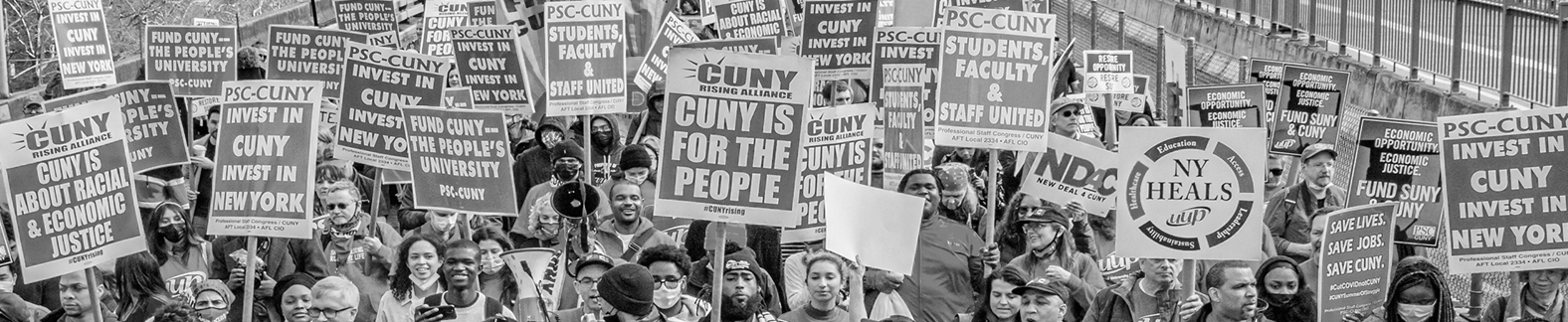
Brooklyn elected leaders joined dozens of CUNY faculty and staff represented by the Professional Staff Congress outside Borough Hall on Wednesday, April 22nd to sound the alarm about persistent health and safety crises across the City University of New York campuses.
Years of underfunding and delayed maintenance have left many CUNY facilities in a state of disrepair, making teaching, working and learning conditions treacherous for faculty, staff, and students. Union members from Brooklyn College, City Tech, Kingsborough Community College and Medgar Evers College gathered to draw attention to their crumbling facilities, leaky roofs, broken escalators, failing HVAC systems, and moldy library shelves. As they spoke, the union members held “danger” and “caution” signs and large-format photos they called a “Gallery of Horrors.”
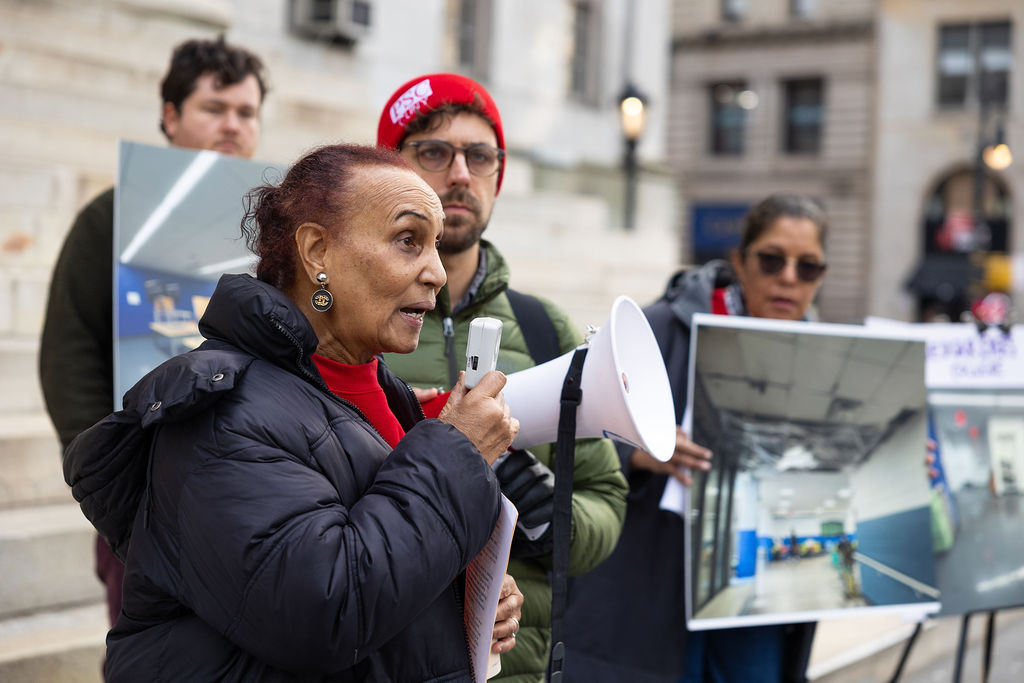
Maudry-Beverly Lashley, PSC Chapter Chair and Medgar Evers College Psychology Professor speaks out about flooding and air quality in the college library. (Credit: Paul Frangipaine)
Brooklyn Borough President Antonio Reynoso and Council Member Lincoln Restler demanded action to address the dilapidation and neglect that are the norm on many CUNY campuses.

Brooklyn Borough President Antonio Reynoso speaks up for safe and healthy working and learning conditions at CUNY’s Brooklyn Campuses. (Credit: Paul Frangipane)
“We’re asking CUNY to help us help them. Look out for the physical infrastructure of these buildings, so the work that these students and teachers are doing can finally be matched by the institutions in which they’re working,“ said Borough President Antonio Reynoso.
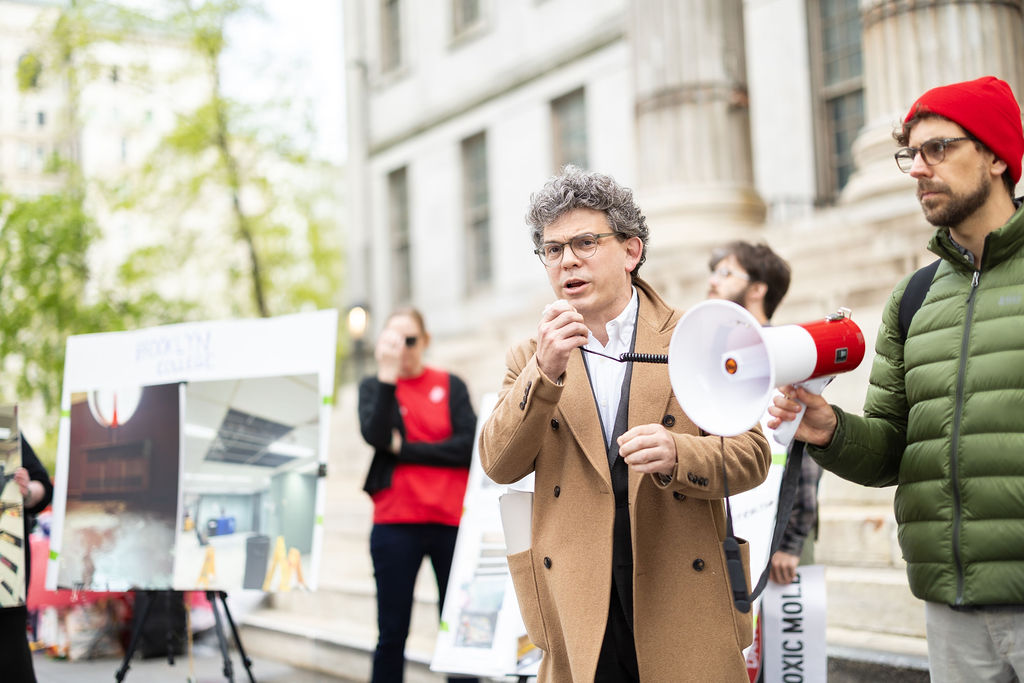
Council Member Lincoln Restler described a tour of the City Tech campus where he saw classrooms with black mold and conditions where he said, “teachers and professors should quite frankly not be working.” (Credit: Paul Frangipane)
“We should not be asking our students, our faculty, and our staff to work in substandard conditions. We need to make real investments in the capital infrastructure of our buildings. We need to invest in maintenance staff to maintain them,” said Council Member Lincoln Restler. City Tech is located within Restler’s council district (CD33).
Most of CUNY’s 300 buildings are more than 50 years old; 84 were built prior to 1950. CUNY Executive Vice Chancellor and Chief Operating Officer Hector Batista recently testified to the City Council that about a third of CUNY buildings were in a state of “good repair.” New York City and State each provide half of the capital funding for the community colleges, while the State provides capital investment for the senior colleges. CUNY has requested $400 million per year for Senior Colleges and $200 million per year for Community Colleges to bring the state of good repair rate up to 55% by 2030 (pg 167)
The union’s health and safety watchdogs agree with administrators that CUNY needs vastly more City and State funding to fix its facilities, but they are also demanding that their university-wide and college bosses clean up their acts and take health and safety more seriously. They also want safety to be guaranteed when repairs finally are undertaken.
“We hear denial and intransigence from CUNY administrators in response to our health and safety concerns,” said Megan Behrent, an associate professor of English at City Tech, who has written and testified about mold, construction debris and other threats on her campus.
“PSC members have a legal and contractual right to safe and healthy workplaces. We’ll work with administrators to secure the funding to fix our facilities. But business as usual is unacceptable. This union will not allow management to get away with slipshod repairs and understaffing of maintenance. We will not tolerate their tactics of deferring, denying, and delaying while our members and students are exposed to threats to their health and safety,” said PSC/CUNY President James Davis.
These are just a few examples of how awful conditions are on campuses that make for some of the worst working and learning conditions at CUNY:
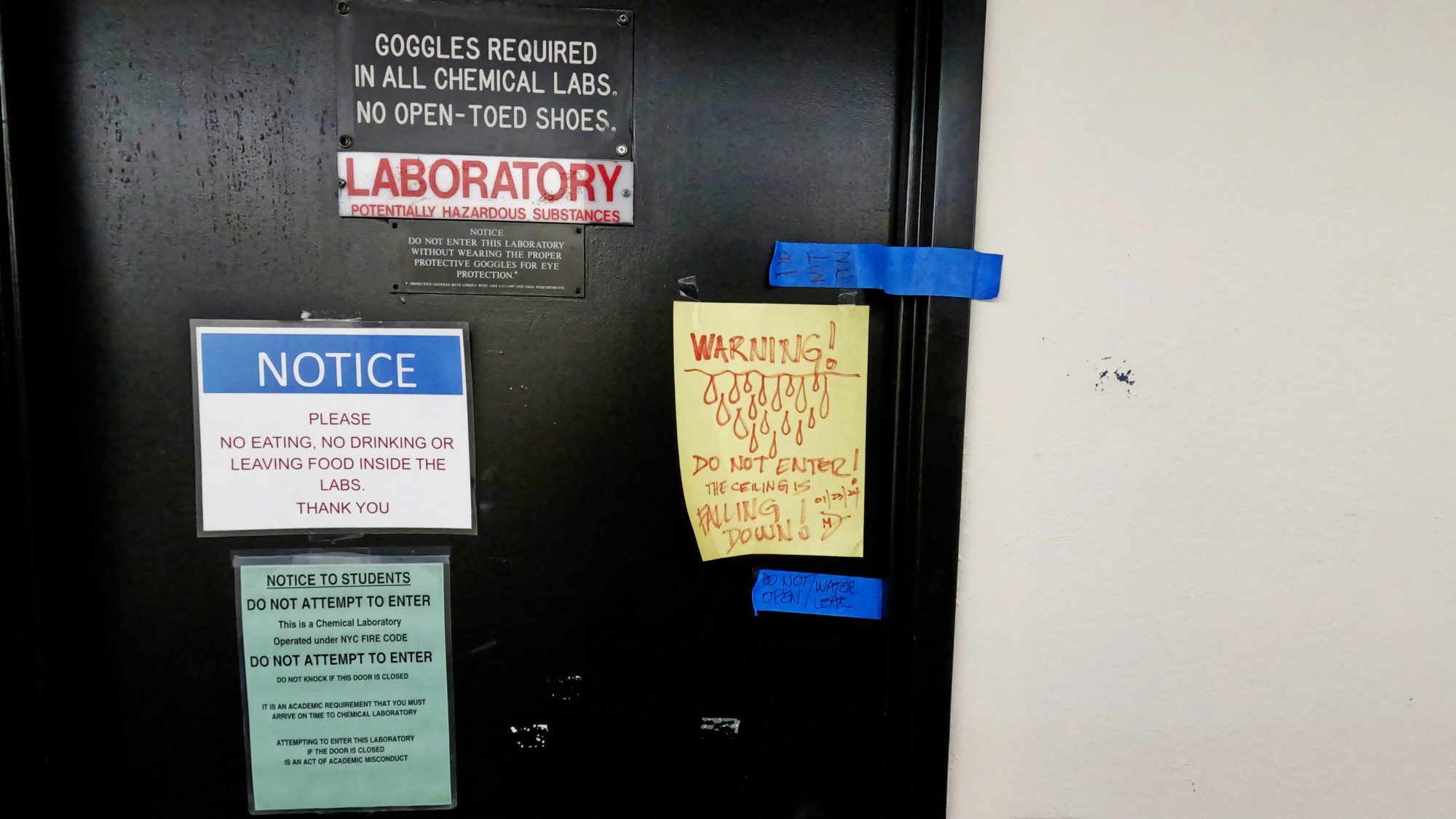
Health and Safety issues at Kingsborough CC
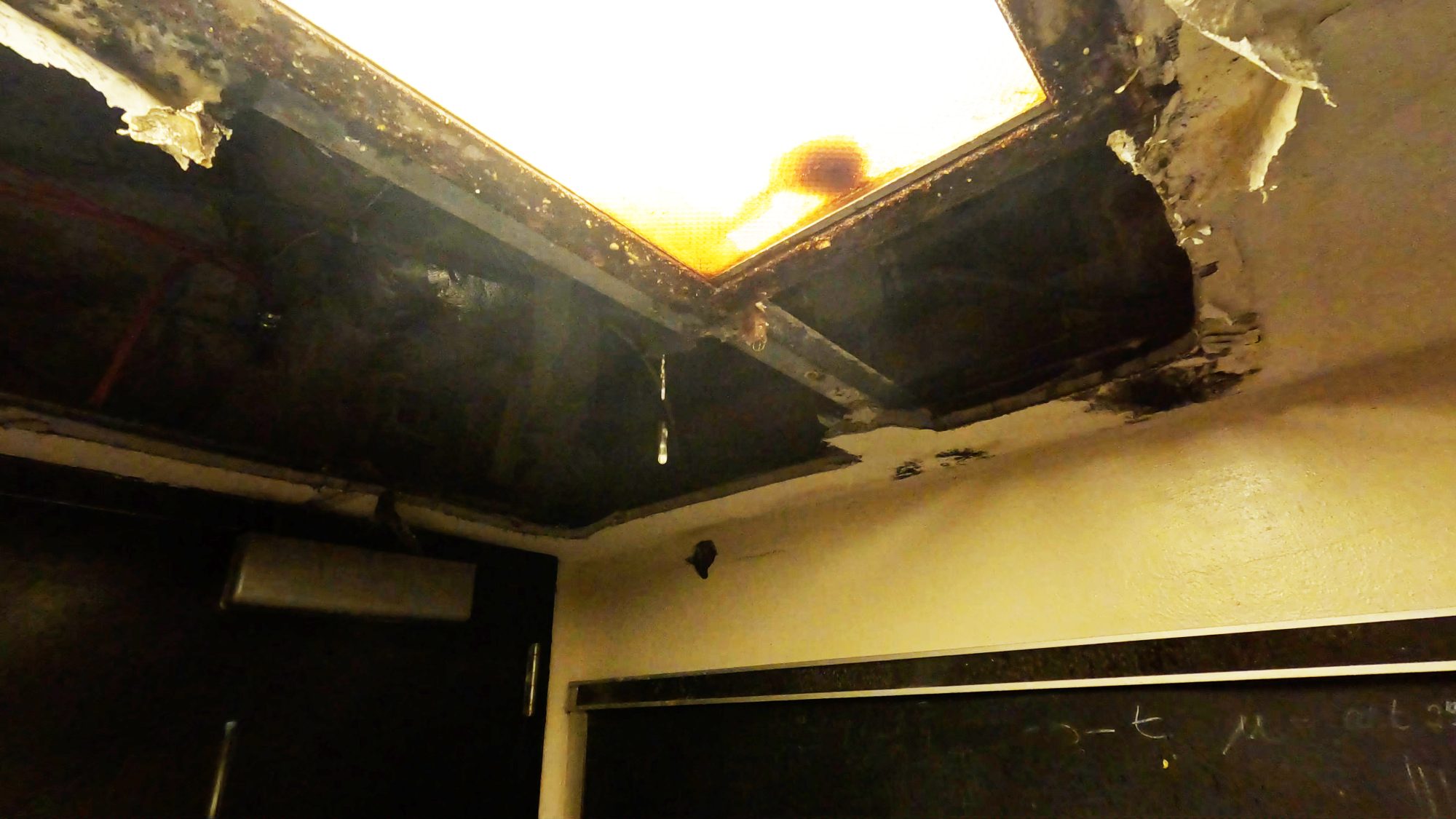
Health and Safety issues at Kingsborough CC
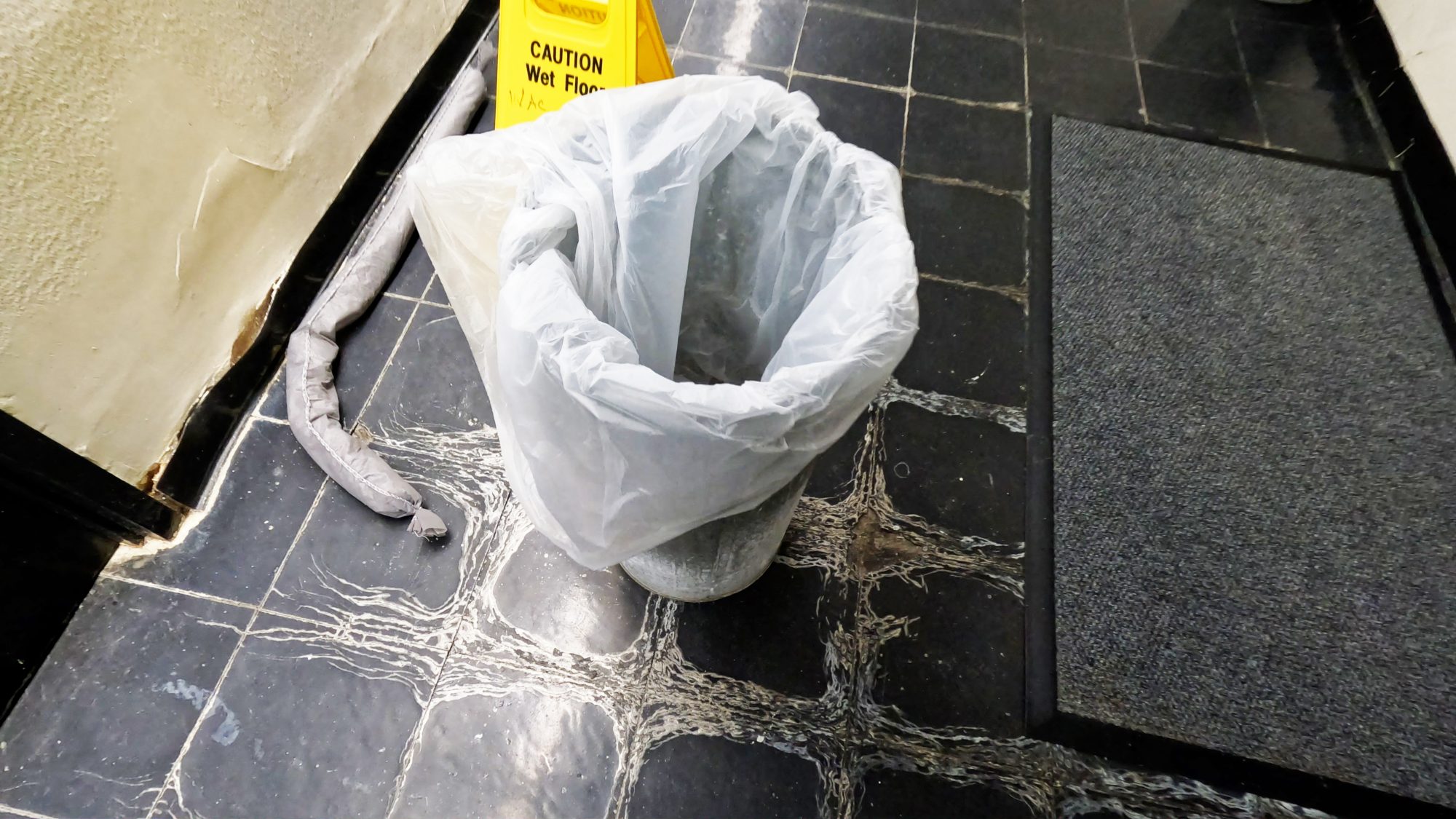
Health and Safety issues at Kingsborough CC
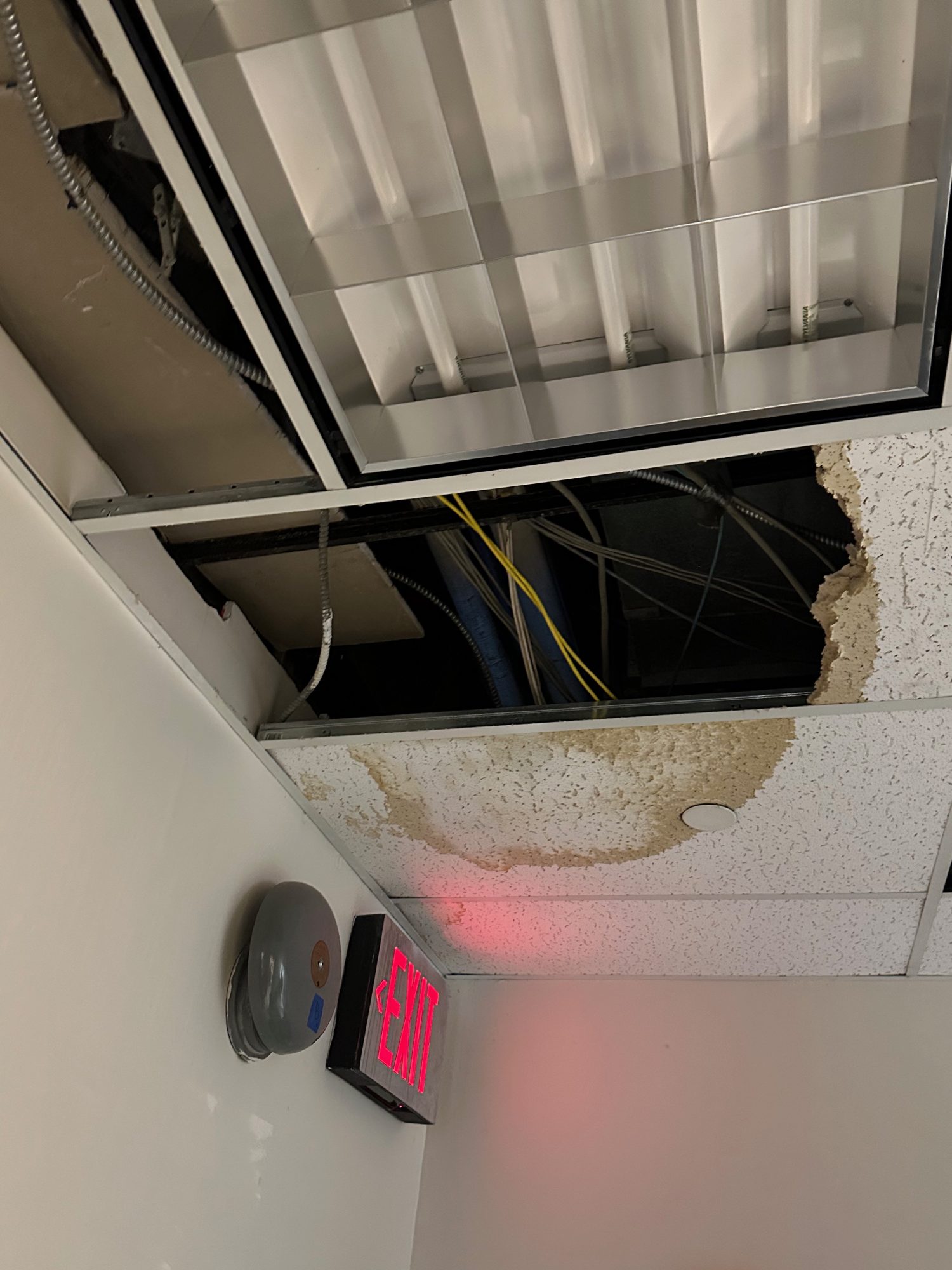
Health and Safety issues at City Tech
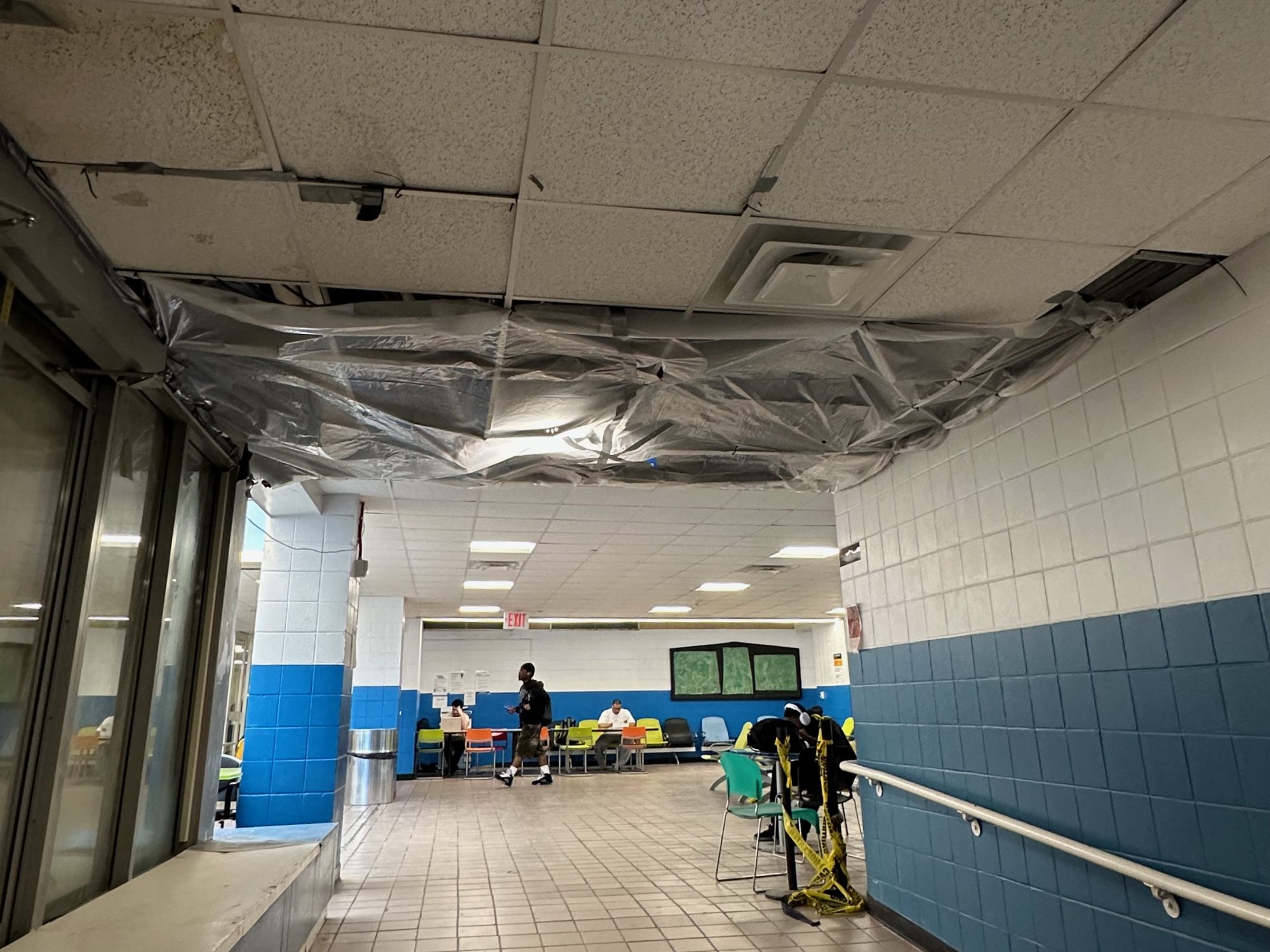
Health and Safety issues at City Tech
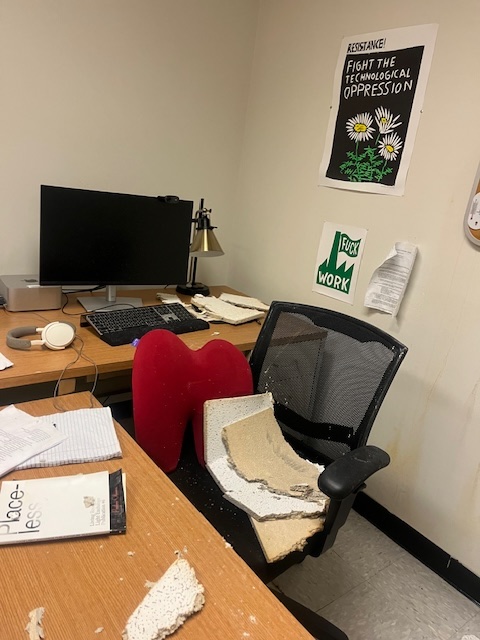
Health and Safety issues at City Tech
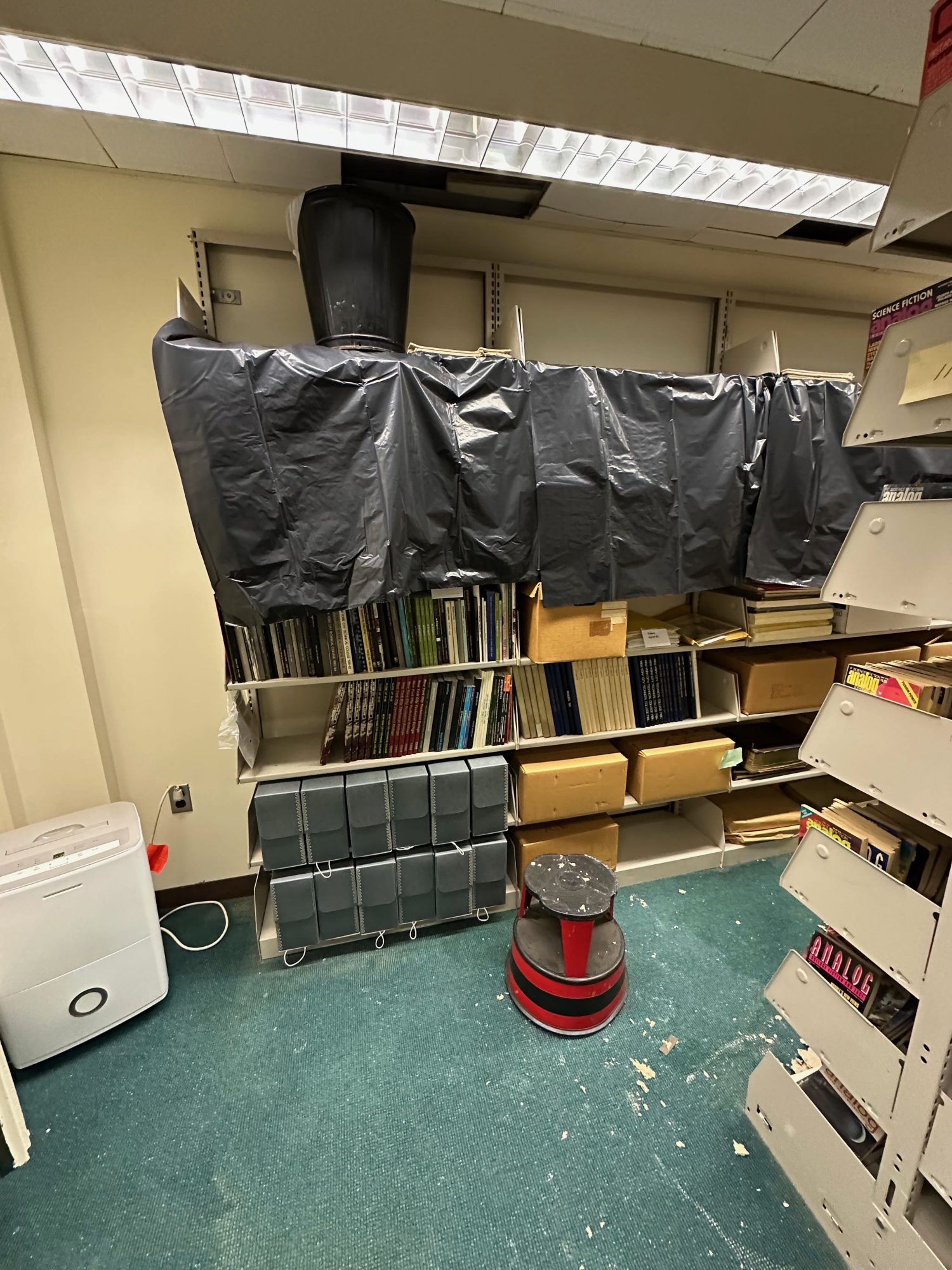
Health and Safety issues at City Tech
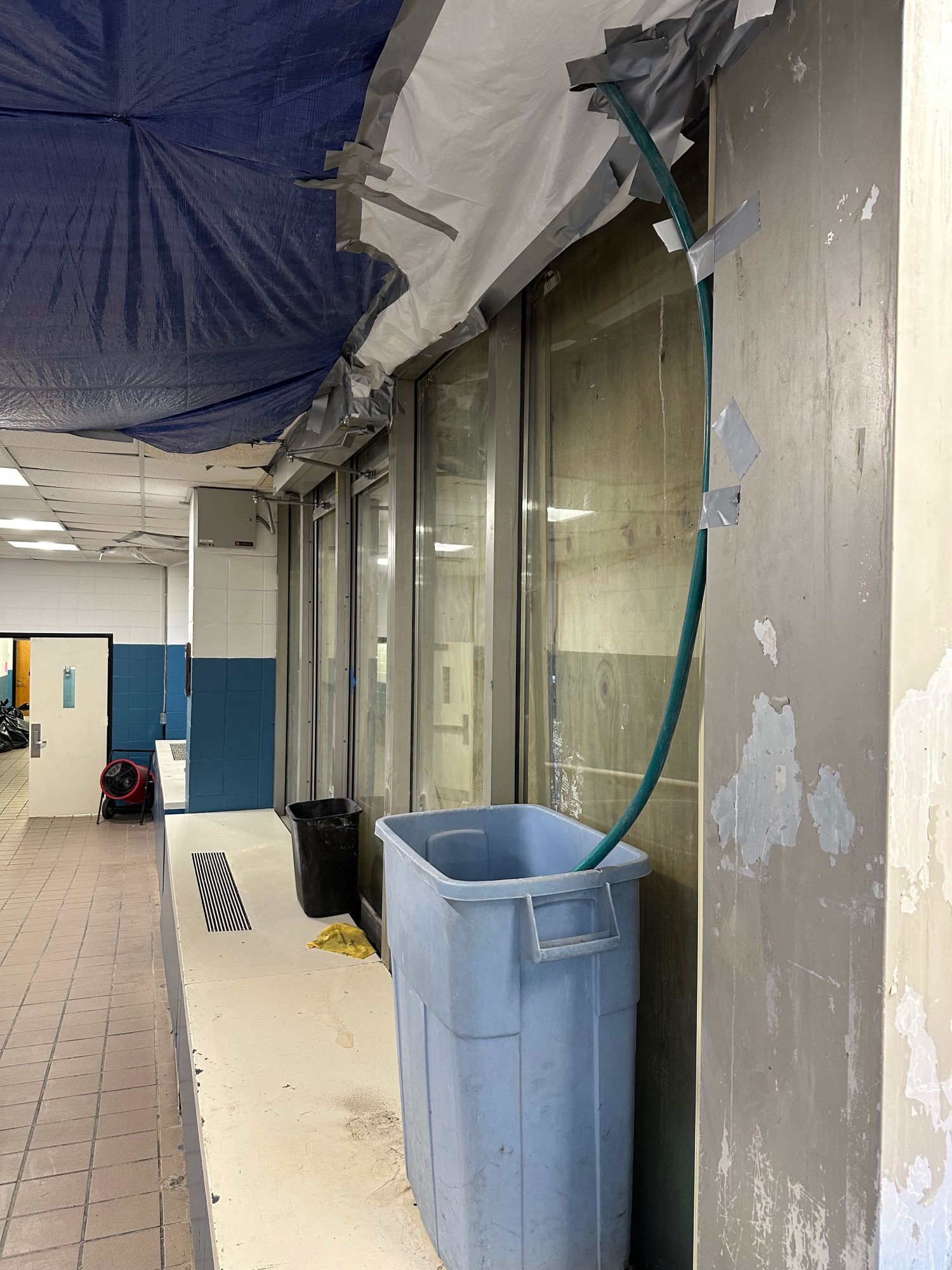
Health and Safety issues at City Tech
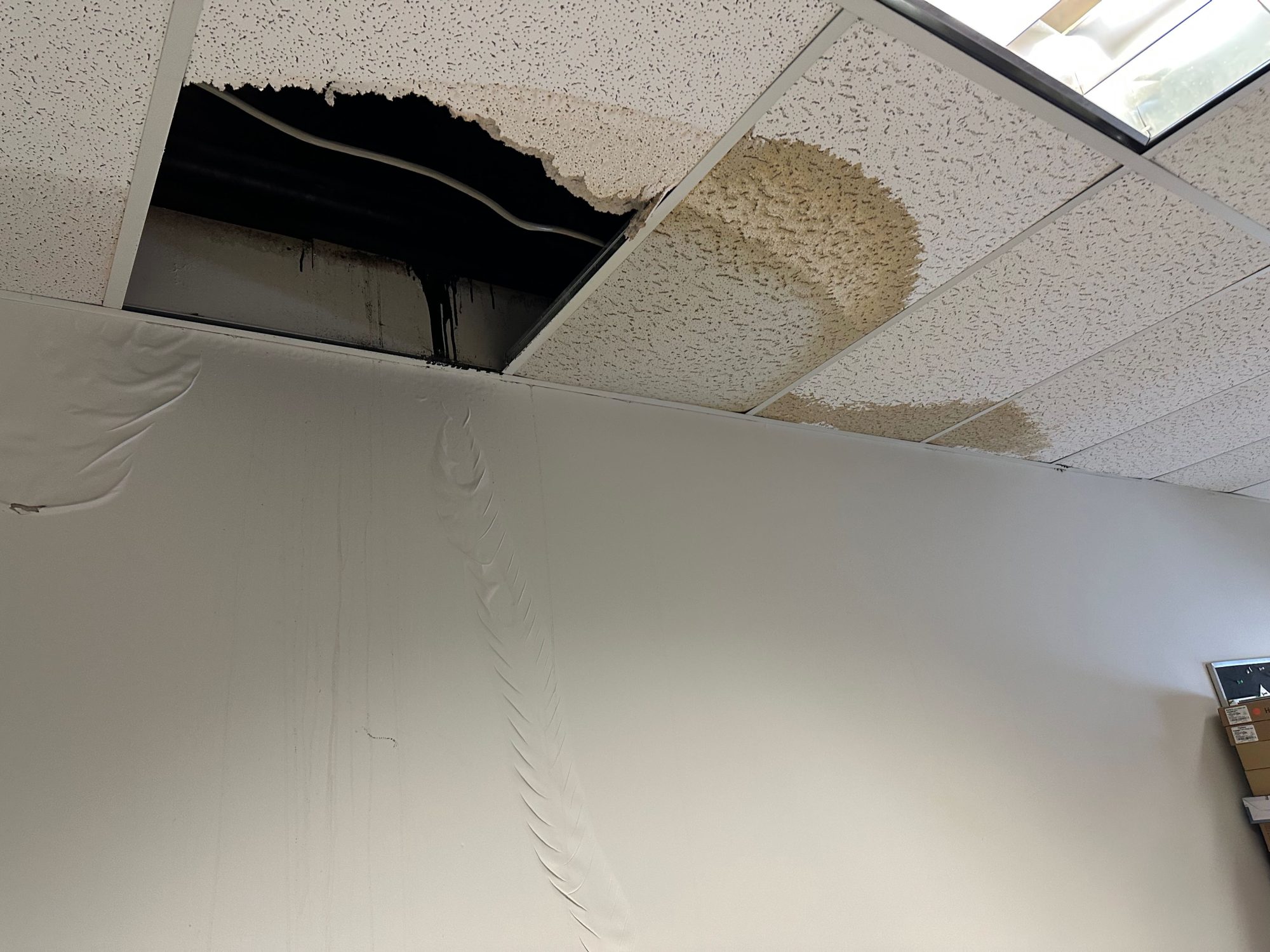
Health and Safety issues at City Tech
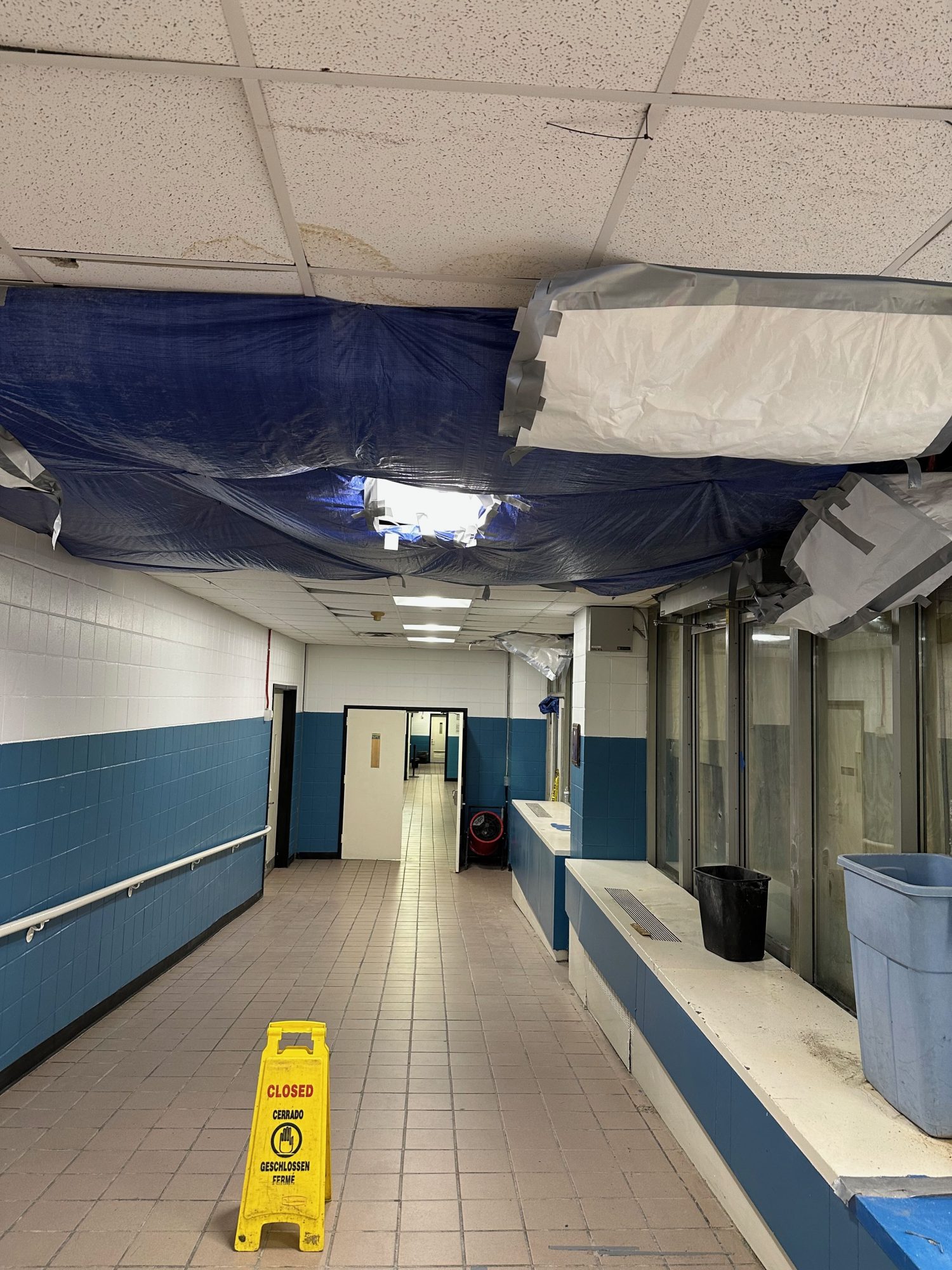
Health and Safety issues at City Tech
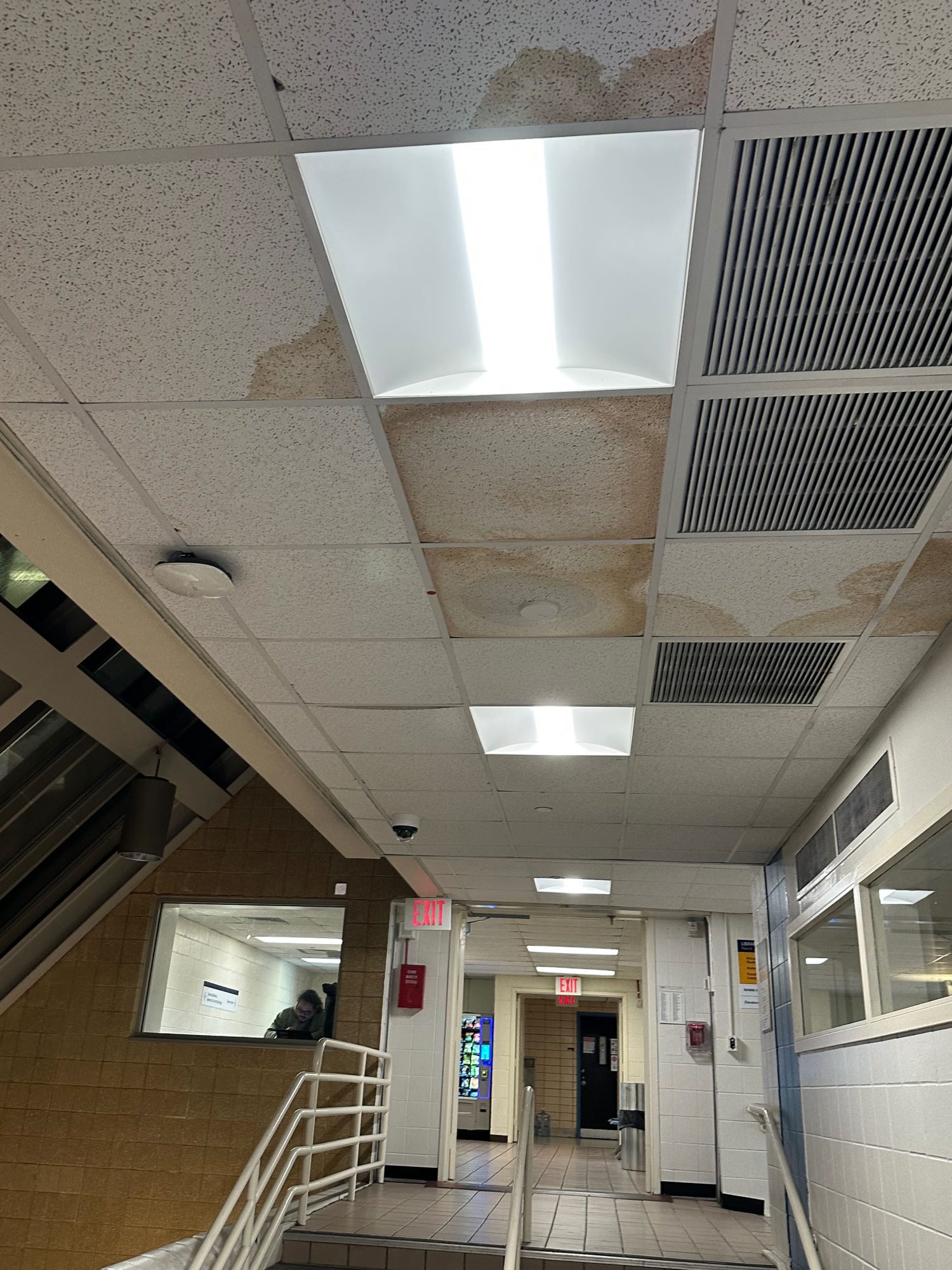
Health and Safety issues at City Tech
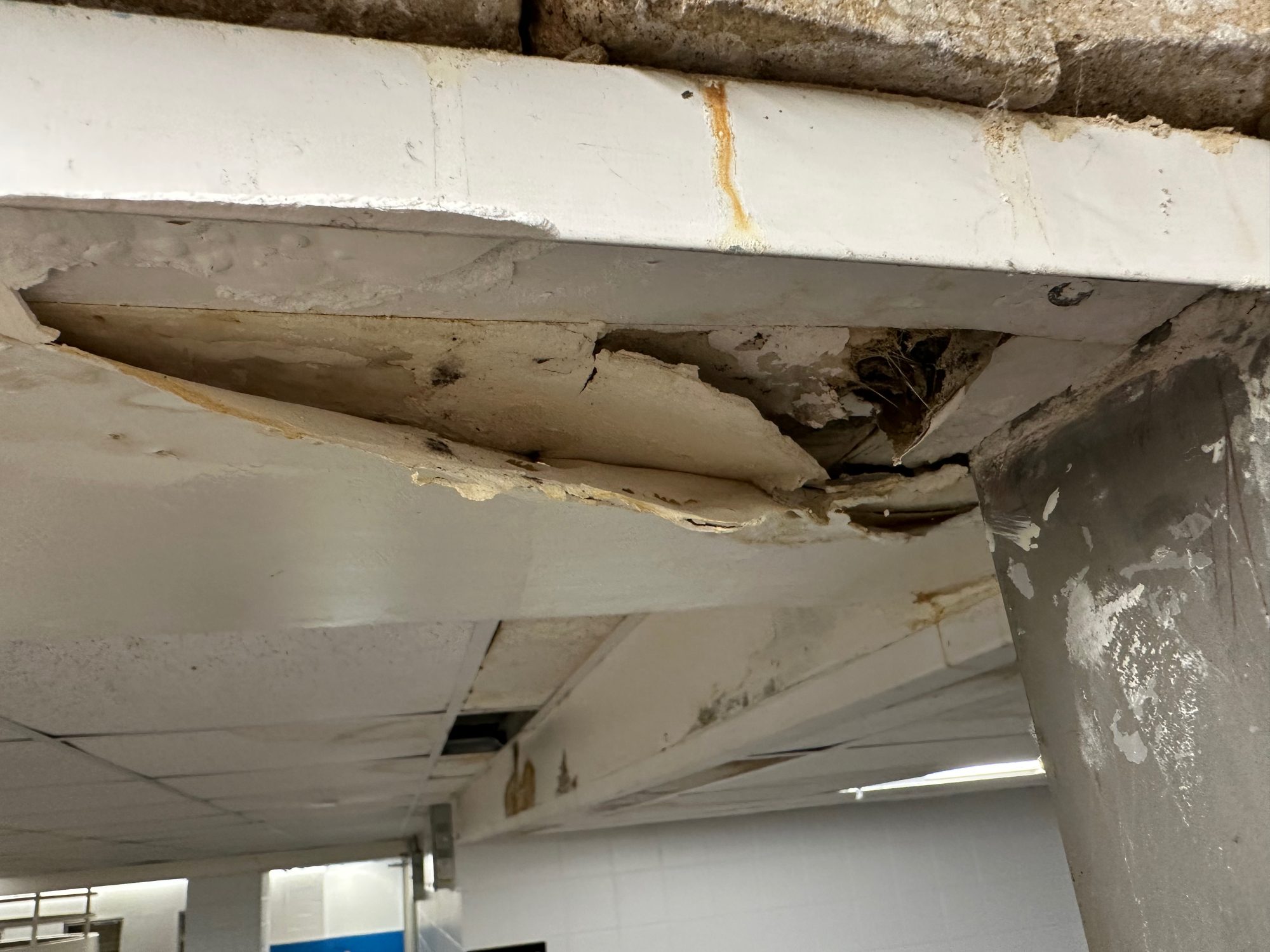
Health and Safety issues at City Tech
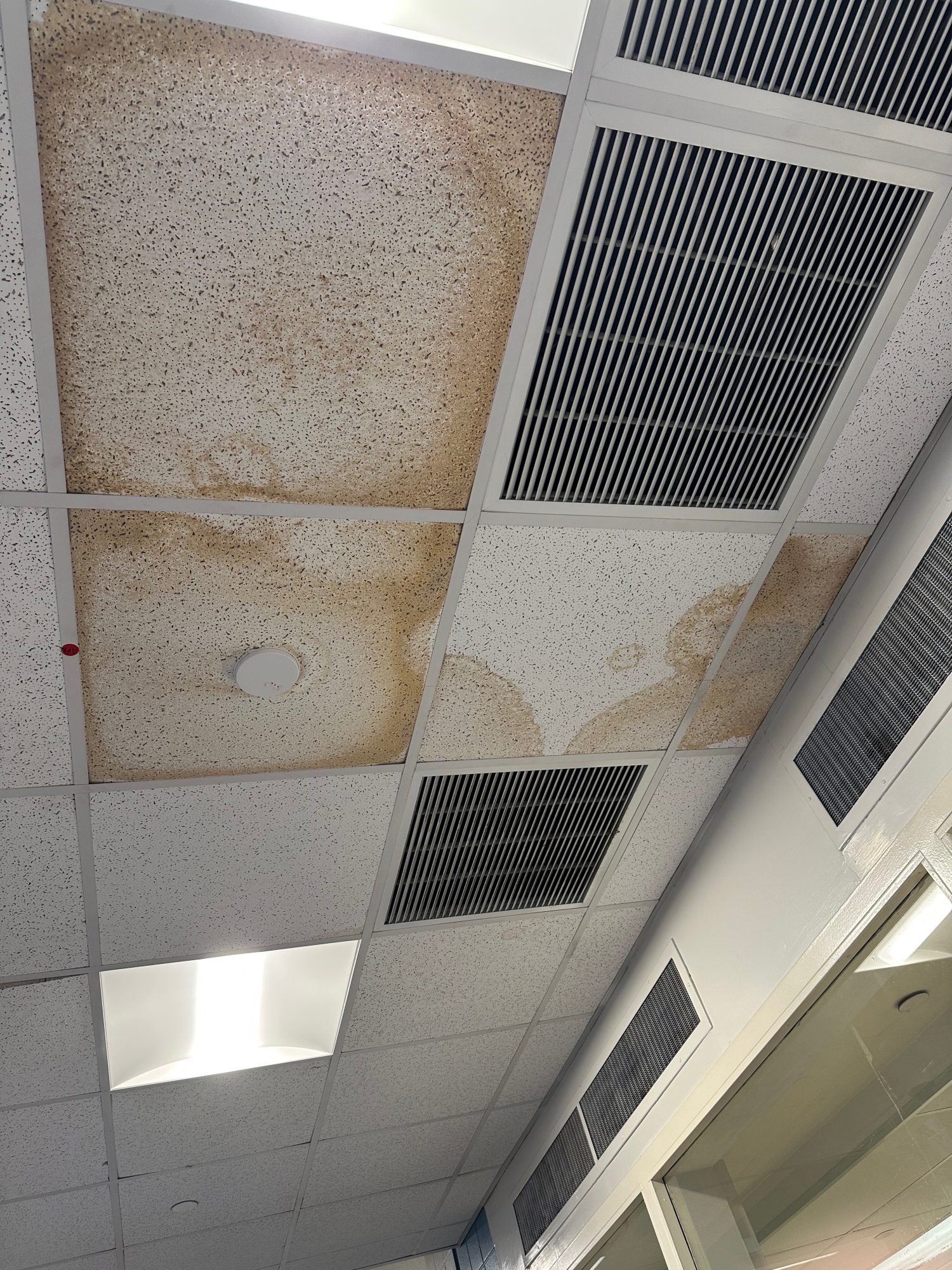
Health and Safety issues at City Tech
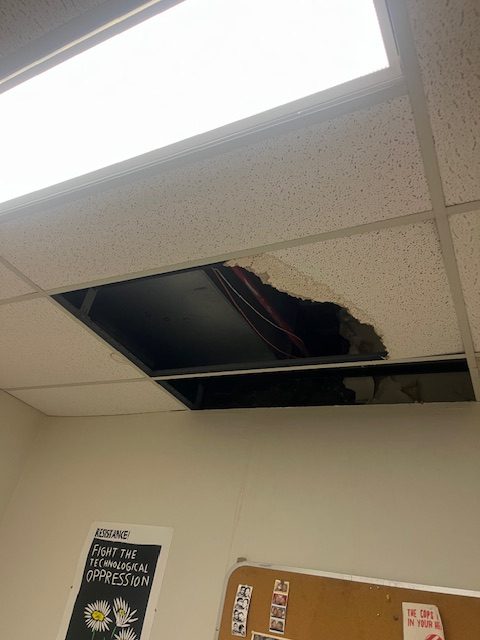
Health and Safety issues at City Tech
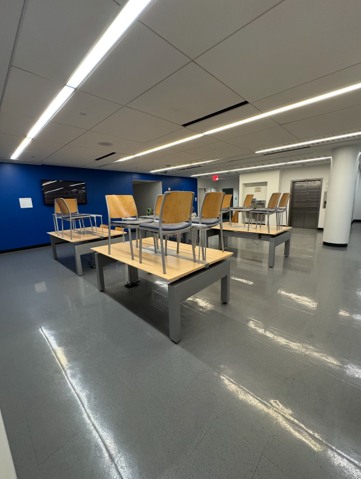
Health and Safety issues at Medgar Evers College
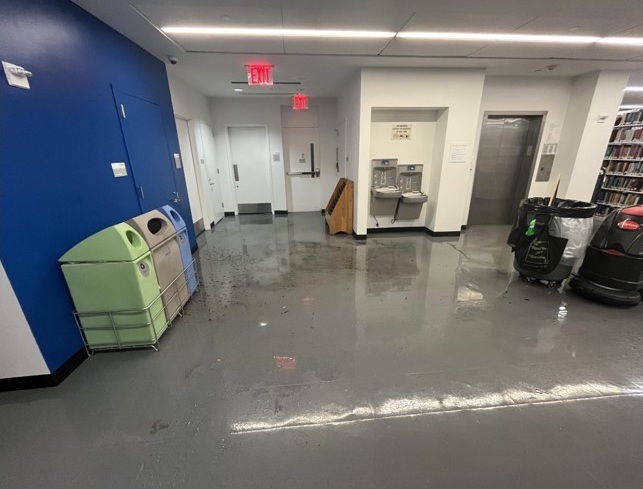
Health and Safety issues at Medgar Evers College
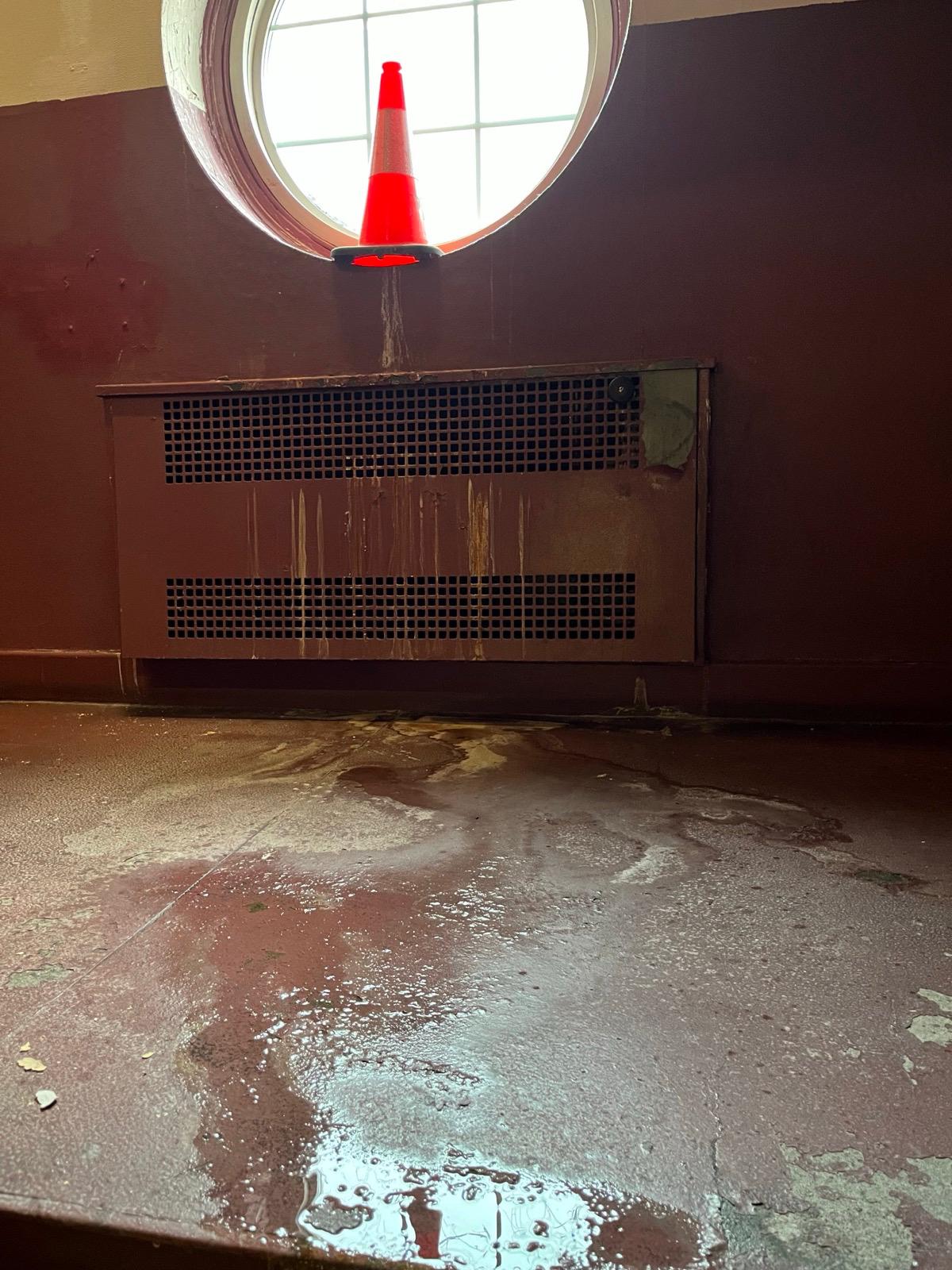
Health and Safety issues at Brooklyn College
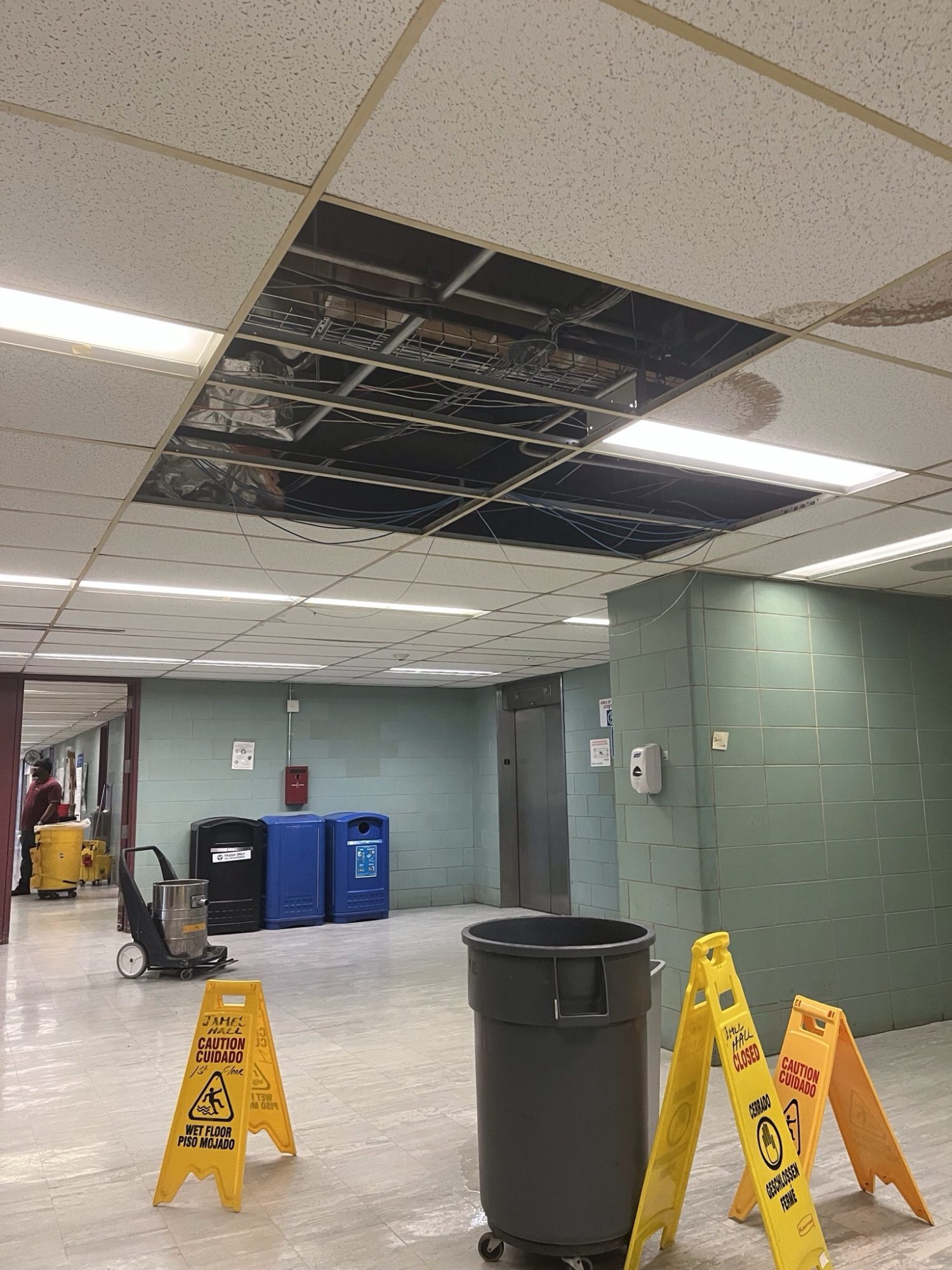
Health and Safety issues at Brooklyn College
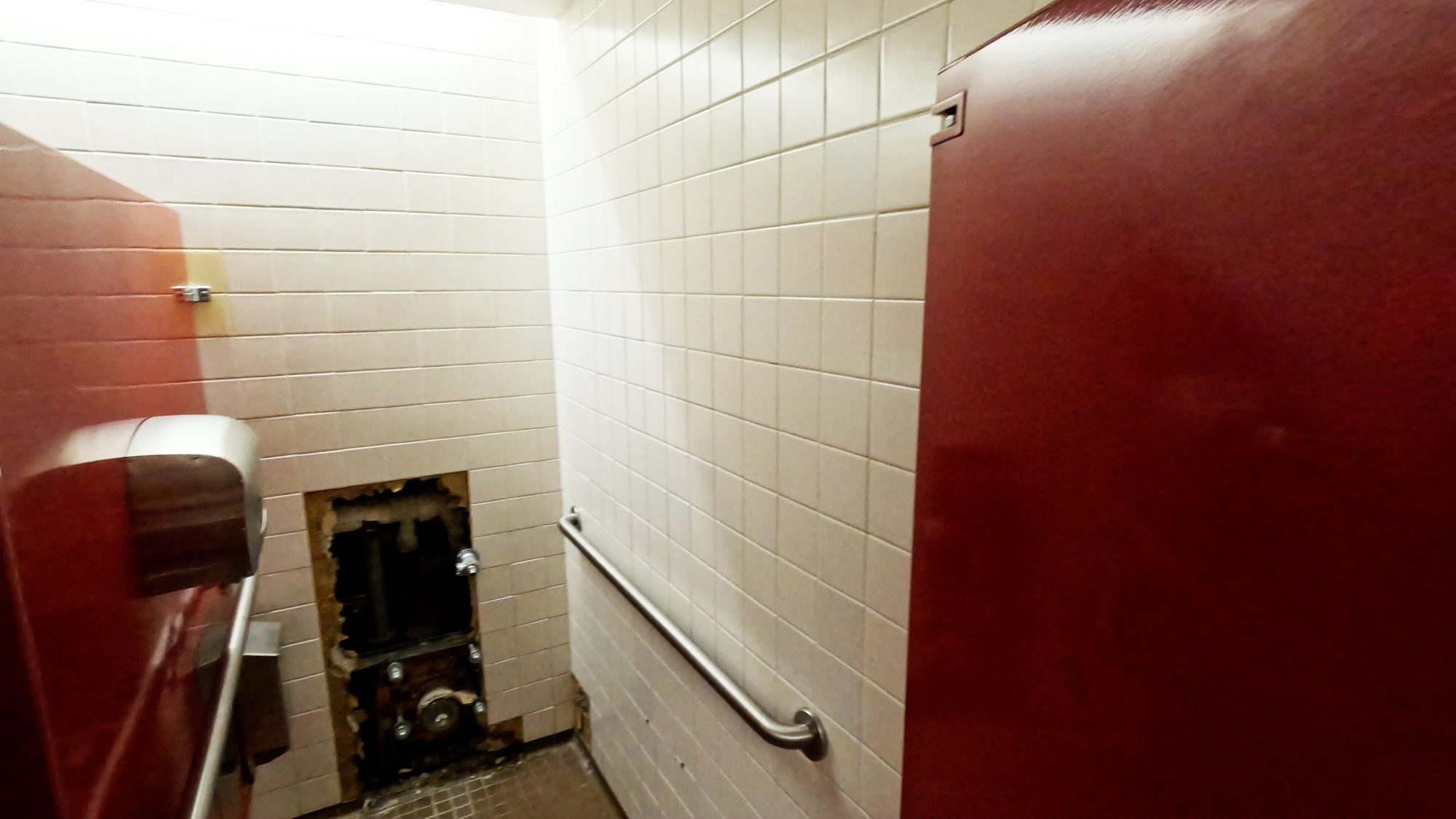
Health and Safety issues at Kingsborough CC
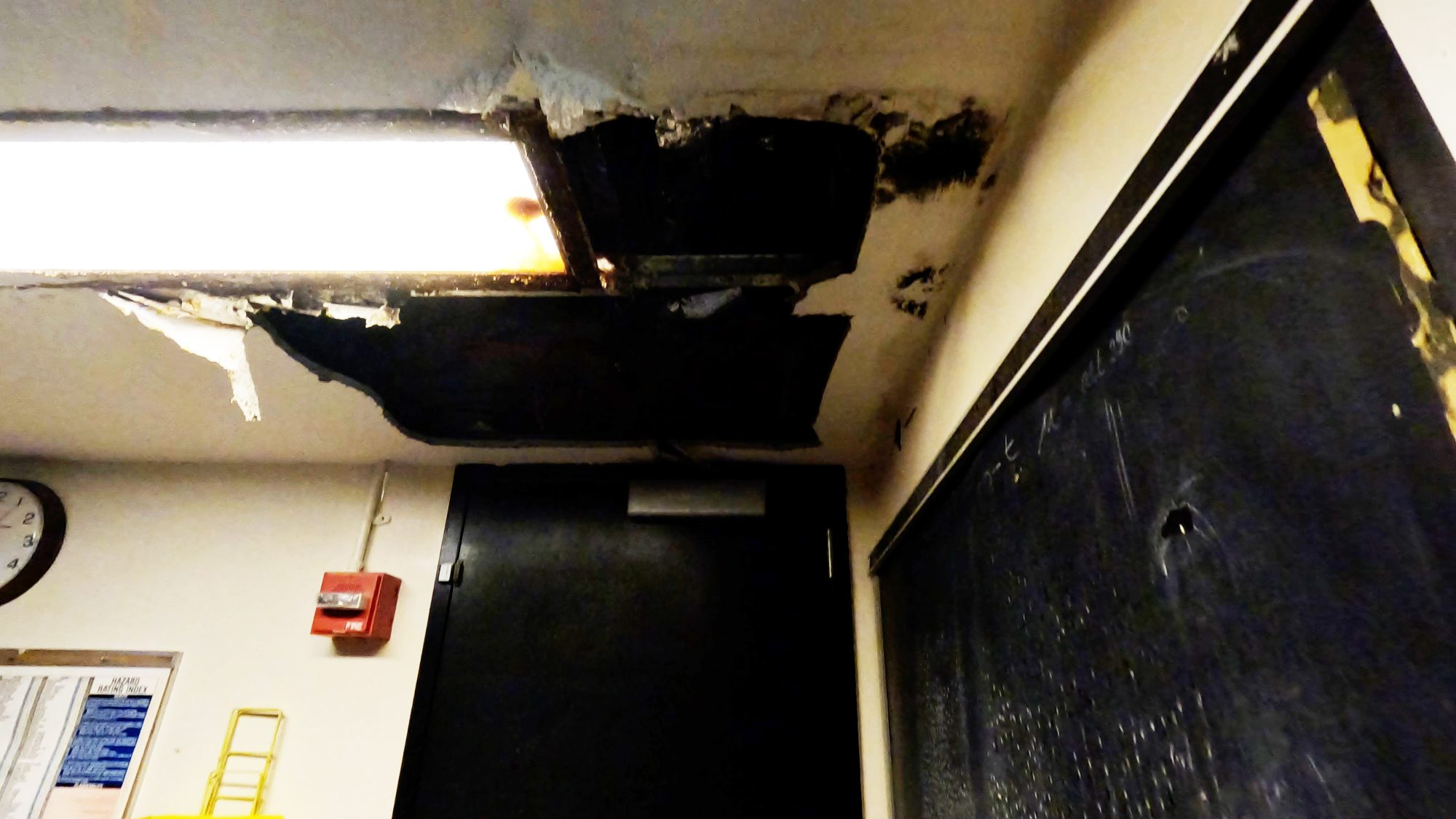
Health and Safety issues at Kingsborough CC
Brooklyn College
[Photo: Boylan Hall Stairwell, Feb 2026; James Hall, Feb 2026]
HVAC issues routinely cause temperatures that are too high or too low, internet outages because of servers overheating, and huge swings in humidity have damaged valuable equipment, including two Steinway pianos. Broken or burst pipes and leaks – most recently in some faculty labs in James Hall – disrupt faculty research as well as access to clean and functional bathrooms. Peeling paint, ongoing “patch” jobs to cover mold and perennial rodent and pest issues are daily reminders that we do not have enough staff to maintain buildings and that CUNY management continue to ignore the immediacy and urgency of the situation.
City Tech
Water intrusion is frequent throughout our older buildings, leading to frequent leaks, floods, falling ceiling tiles, and pervasive mold. A recent environmental assessment found over 40 classrooms to be mold infested, and found rat feces across thousands of square feet above the ceiling tiles of the college’s day care. When repairs are made, they are often superficial and do not address the source of water intrusion. While capital projects are underway that may improve the long-term structural problems, construction has created new problems: more leaks, holes in ceilings exposing people to construction (including sites where asbestos abatement is underway), and unidentified clouds of dust that trigger respiratory symptoms.
Kingsborough Community College
[Photos: S Building Lab, March 2026, Gym Bathroom, March 2026]
Elevators are frequently out of service, restricting accessibility for students and staff with mobility needs. Leaky roofs across multiple buildings create hazardous conditions, with water intrusion posing risks of slips, mold, and damage to instructional spaces. Bathroom facilities are often in disrepair, with broken fixtures, poor sanitation, and inconsistent maintenance affecting daily use. Together, these issues reflect a systemic inability to address basic facility needs, raising concerns about the college’s capacity to provide a safe, accessible, and functional learning environment for its campus community.
Medgar Evers
[Flooded Library 1, October 2025; Flooded Library 2, October 2025]
Exposure to mold, persistent indoor air quality issues, and extreme temperature fluctuations at Medgar Evers College have created a significant health crisis. Despite warnings dating back to 2021 and formal testimony provided in 2023 and 2025, the administration has been prioritizing technical loopholes over essential structural repairs. The recurring moisture intrusion, highlighted by recent flooding in October 2025 in the library, triggers severe respiratory risks and degrades students’ learning environment.
Published: April 23, 2026