Faculty in the sciences fighting against the deep federal cuts to research can claim a victory this month. Research could use the help, as funding fell dramatically last year.
The New York Times reported that on January 5 “A federal appeals court ruled..that the Trump administration could not make drastic cuts to the federal funding supporting much of the country’s medical and scientific research, reaffirming a lower court’s ruling from early last year.” The US Court of Appeals for the First Circuit said that “one of the Trump administration’s earliest attempts to kneecap universities, through proposed reductions to grants from the National Institutes of Health, was unlawful.”
The latest ruling upholds a lower court’s ruling stopping the Trump Administration from limiting funding for Indirect Costs (i.e. university’s overhead and support expenses) at just 15% of awarded research funds.
That’s good news for academic researchers in the sciences. “The decision preserves institutions’ access to billions of dollars for annual expenses, such as lab costs and patient safety, which are not easily connected to specific projects,” Inside Higher Ed noted. “The NIH negotiates individual reimbursement rates with each institution, but a cap would change that and limit funding. US District Court of Massachusetts judge Angel Kelley first blocked the rate cap last February, and it has remained blocked since.”
Reimbursement rates for Indirect Costs related to federally funded research at CUNY colleges are negotiated by the CUNY Research Foundation and can amount to well over 50%. That’s overhead funding in addition to the awarded research funds.
“I think that this is a good outcome, and shows how legal action can provide results, although the timeframe is very slow,” said Cathy Savage-Dunn, chair of the biology department at Queens College, and a prominent activist in the PSC’s Defending Research Working Group. “Indirect costs are the part of the grant budget that goes to the institution, rather than to the research team, to support the research infrastructure. They are used to hire staff to ensure compliance with safety guidelines and to prevent conflicts of interest. These funds are also used to equip, maintain, and staff shared research facilities. An abrupt change to the way in which these costs are funded would mean shutting down projects and firing personnel. Congress specifically drafted legislation to prevent arbitrary changes to the indirect costs.”
John Dennehy, professor of biology at Queens College, said, “The administration’s attempt to reduce indirect costs to 15% of federal grant funding threatened to severely curtail biomedical research activity at CUNY. The appeals court’s decision is a positive development since they reaffirmed that the executive branch cannot unilaterally override funding structures established by Congress. However, we are not out of the woods yet. CUNY faculty and the union should continue to advocate for the preservation of the existing system.”
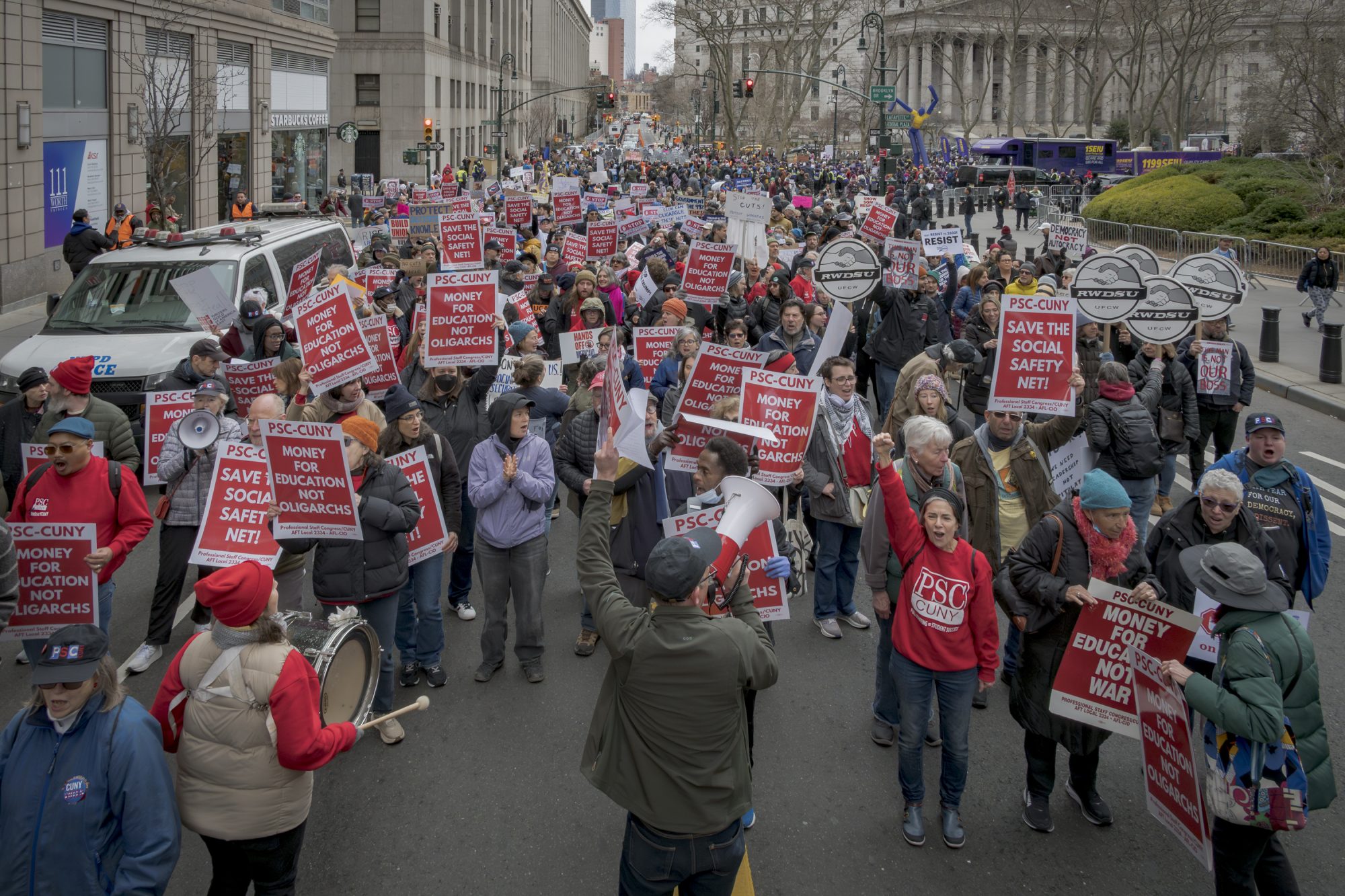
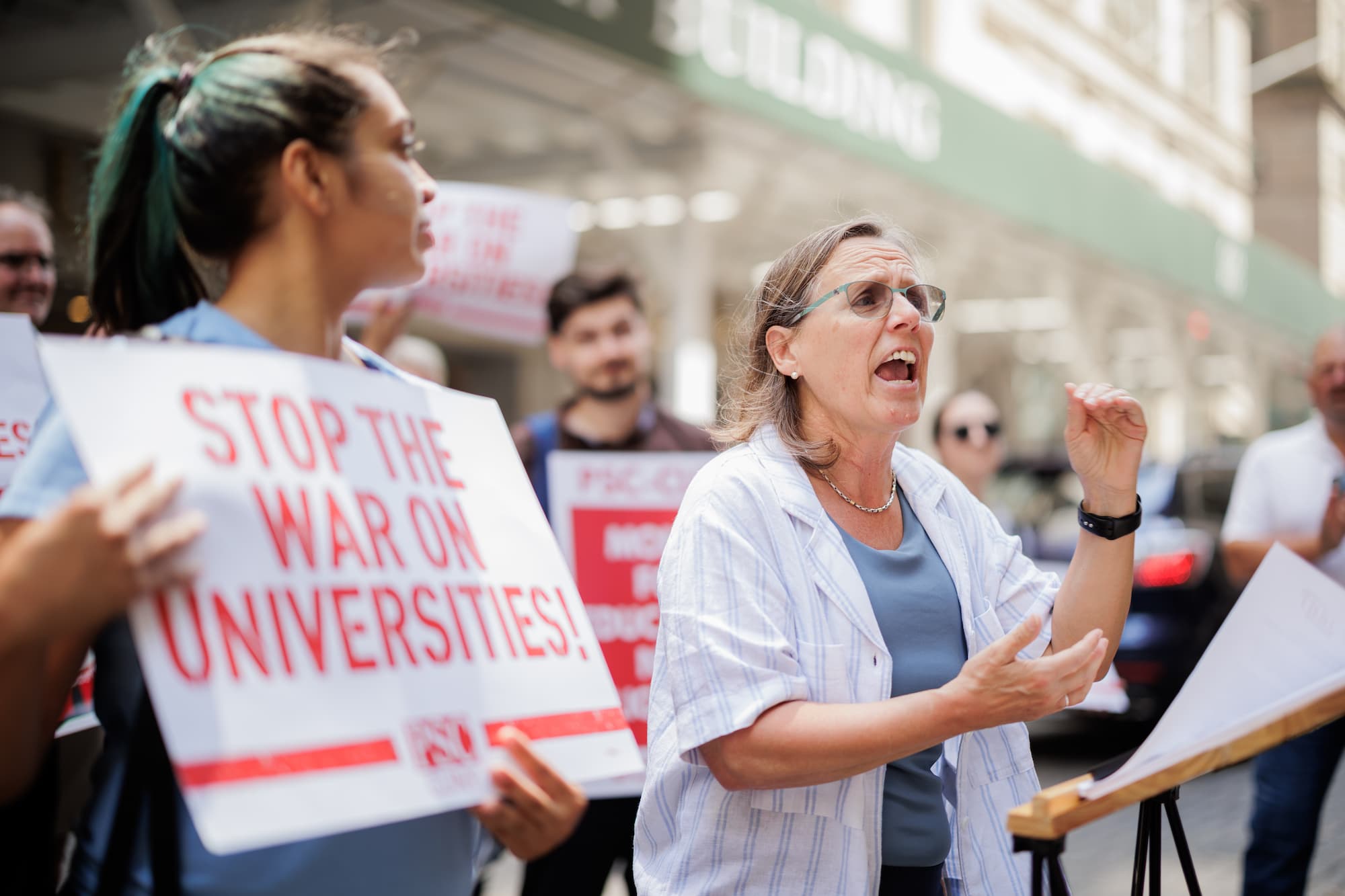
The PSC’s Defending Research Working Group, made up of members in the sciences across the CUNY, have been mobilizing against the federal cuts since Donald Trump was elected to a second term. Clarion has reported on these efforts time and again. The group issued an open letter to the state’s congressional delegation with more than 2,000 signatures from researchers demanding full defense of federal research funding and protections for scientific research. The letter was publicized at a press conference with NYSUT leaders and then-Comptroller Brad Lander on June 30 in lower Manhattan.
Michael Green, a professor emeritus of chemistry and biochemistry at City College and an activist with the working group said, “The cuts to research have been essentially catastrophic and a lot of scientists are no longer staying in the United States, some of them are going home, some of them are going to Europe and Canada. The funding can be stabilized, people might stay, but you cannot build up a research group–it takes years–without having some hope of stability in the funding.”
Members of the group have vowed to keep fighting and look for ways to keep funding for research flowing to faculty. It remains to be seen if the Trump administration will appeal the latest ruling to the Supreme Court.
Linda Vigdor, grants manager at the Advanced Science Research Center at the Graduate Center, said “The union and CUNY Central could perhaps collaborate to push for more funding to come to CUNY.”
Nancy Romer, a retiree officer on the union’s executive council, vowed to fight on.
“This appeals court ruling denies Trump’s ability to arbitrarily cut funding to medical research, especially knee-capping universities which have become dependent upon grants’ overhead costs to run both the grants and other indirect functions of universities,” she said. “It does not, however, provide a green light for all medical research going forward. Attacking universities as institutions of independent thought and open inquiry, both dangerous to Trump’s authoritarian agenda, is a core part of all would-be dictators’ play books. Denying overhead funds from research grants allowed Trump to wield power over universities.”
She lamented that many top universities have capitulated to the Trump administration, saying that this should inspire faculty to fight harder. “We in higher education and research in general must fight this attempt to control our culture, our knowledge and our thoughts,” Romer said. “We do this collectively, through our union, the American Association of University Professors, and various other organizations ready to fight. We fight alongside our students and colleagues and know that in the long run we will prevail and come out on the other side stronger and more determined and united to protect free inquiry and life-saving research.”
Published: January 15, 2026