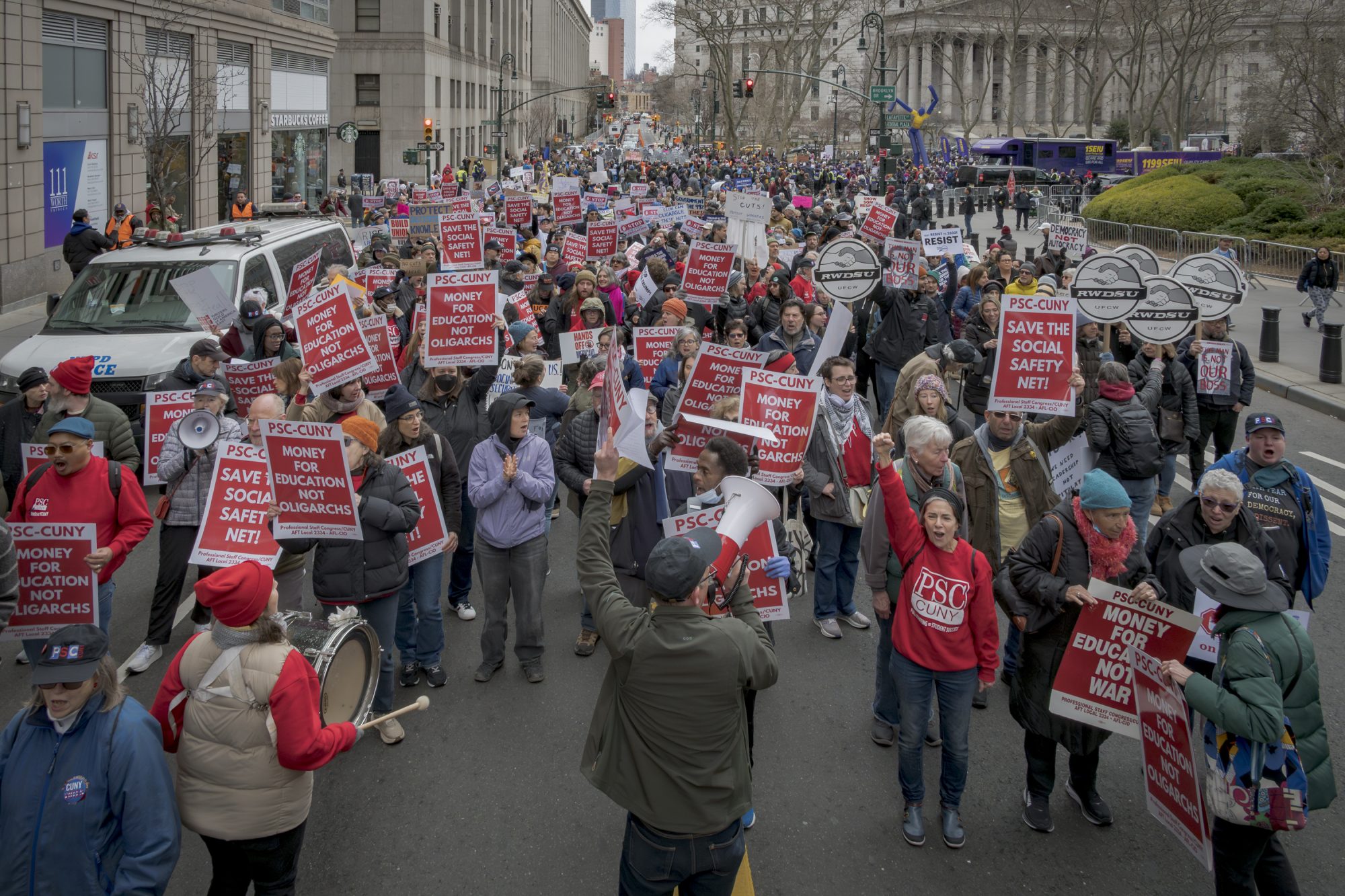
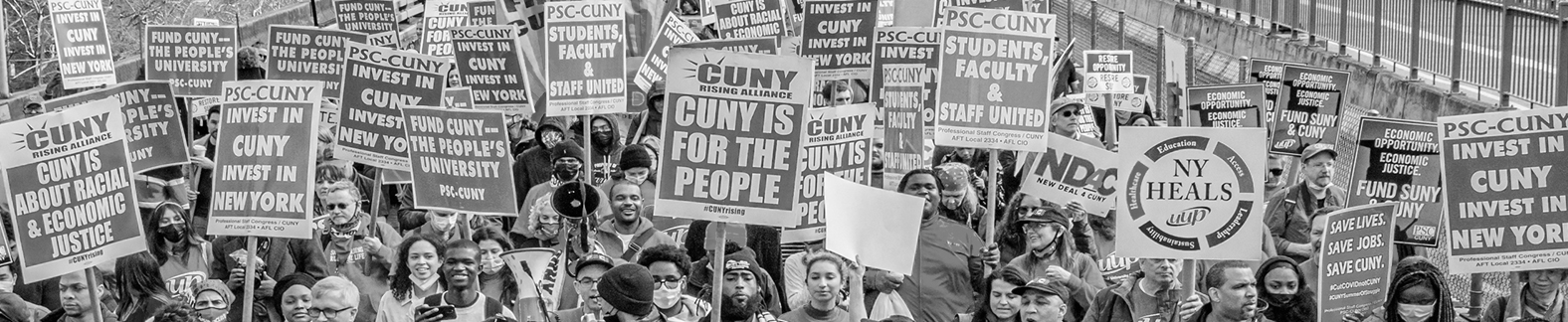
Editor’s note: This piece and the Paul Brown piece in this issue are part of an ongoing exploration by PSC members on the subject of rising authoritarianism and how we can fight it.

Ángeles Donoso Macaya
By September 1973, union activity in Chile was vigorous and visible: There were 6,700 active unions with almost a million unionized workers. This promising outlook changed rapidly after the September 11 coup. Augusto Pinochet’s military junta took steps to weaken the organizational strength and political power that workers had gained during the government of Salvador Allende and the Popular Unity (1970-1973). The military declared the Central Unitaria de Trabajadores (CUT, founded in 1953) illegal and implemented a policy of repression and extermination unparalleled in the country’s history, largely focused on the working class and peasant sectors.
WORKERS TARGETED
Dozens of union leaders and hundreds of urban and rural workers were persecuted, kidnapped, tortured, and murdered or disappeared, and several thousand survived (the civil-military dictatorship murdered 2,123 people, disappeared 1,093, and imprisoned and tortured more than 40,000). In addition to mobilizing the armed forces and maintaining a secret police and intelligence services, Pinochet deployed loyal media outlets like El Mercurio and La Segunda to support his reign of terror and spread fabrications and fake news – because both censorship and disinformation are necessary for the perpetuation of state terrorism (and, today, of genocide).
CONTEXT
I delve into the context to emphasize how dangerous, and therefore how risky, it was to resist the dictatorship – even uttering the word “dictatorship” was daring. However, after a forced retreat that lasted three years (until 1976), the union movement began to regroup. In 1977, the Coordinadora Nacional Sindical (National Trade Union Coordinator) was formed, uniting leftist sectors. Its first public event, the commemoration of May Day in 1978 in Santiago, was violently repressed. Other Christian-oriented and anti-Marxist confederations were also formed, and some unions were reorganized, but with extremely restricted bargaining power given the anti-union foundation of the Labor Plan imposed in 1979.
Despite the fear, uncertainty and precariousness brought on by the economic crisis that reached its peak in 1982 (a direct result of the rampant implementation of neoliberal policies), the various groups that had been denouncing the crimes perpetrated by the dictatorship acted with the conviction that they could not abandon the struggle, much less leave the streets: The Pinochet regime, like Donald Trump’s today, was oppressive and illegitimate.
The assassination of Tucapel Jiménez, president of the National Association of Fiscal Employees (ANEF), on February 25, 1982, marked a turning point in this regard. The CNS and ANEF had been holding meetings for months to reconcile differences and achieve worker unity. In May of the following year, the Copper Workers’ Confederation (CTC) called for a Paro Pacífico Nacional (Peaceful National Strike). Since political parties had been banned for almost a decade, and many of their leaders remained in exile, the massive response to the call came as a surprise to everyone, including the organizers.
MOVEMENTS
After that Paro, the CNS, the CTC and other confederations organized under the National Workers Command (CNT) and continued to call for nationwide Jornadas de Protesta (Days of Protest). They didn’t wait for the political parties: With the political opposition weak and decimated (a weakness very different, needless to say, from that of the Democratic Party of Schumer and company), the growing workers’ movement became instrumental. It advanced and achieved unity despite external difficulties and internal ideological conflicts, managing to convene and bring together in the streets a variety of groups that until then had operated dispersedly.
UNION ROLE
The Days of Protest called on all of civil society to strike however they could: They called on people to not go to work, to not buy anything, to take to the streets to march, and to bang pots and pans at night. All of these were effective ways of disrupting the status quo – or, in other words, to strike. These Days of Protest, which continued periodically until 1986, were joined by pobladores (neighbors organized through land takeovers), students, workers from different sectors (nurses, teachers, doctors, truck drivers, journalists, photographers, etc.) and political parties; they were all violently repressed. Despite the repression, civil society was tenacious and did not give up. The popular protest, initially brought together by the union movement, transformed and expanded the visibility of the opposition to the dictatorship in the public sphere and, little by little, weakened Pinochet’s claim to absolute power, until it went up in smoke after the 1988 plebiscite.
Ángeles Donoso Macaya is a professor of Spanish at Borough of Manhattan Community College and the Graduate Center.
Published: September 12, 2025